

Pablo
Member
Maximize your credit score and save on interest! Learn the secret to great credit: paying your card early. Full guide on utilization, statement dates, common mistakes, and effective strategies.

Hello Finance Forum!
We all know we have to pay our credit card bills, but the real secret to boosting your score and saving money is paying early. This isn't just about avoiding late fees—it's about managing your Credit Utilization Ratio and minimizing daily interest charges.
Here is the complete guide on why and how to get ahead of your due date!
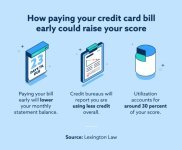
This is the most crucial date if your goal is to reduce your reported balance for a better credit score. Find it on your statement or in your online account.
Step 2: Consider Multiple Payments
Set a goal to pay small amounts throughout the month (e.g., every payday) rather than waiting for the end.
Step 3: Track Your Due Dates
Even with early payments, you must still ensure the minimum due amount on the new statement is paid on time.
Be careful when adjusting your payment habits:
Summary: Pay Early, Win Big!
Have you tried paying early? Share your experience below! 
 [GUIDE] Pro Tips: Paying Your Credit Card Early for Maximum Score & Savings!
Hello Finance Forum!We all know we have to pay our credit card bills, but the real secret to boosting your score and saving money is paying early. This isn't just about avoiding late fees—it's about managing your Credit Utilization Ratio and minimizing daily interest charges.
Here is the complete guide on why and how to get ahead of your due date!
What Does “Paying a Credit Card Early” Actually Mean?
Simply put, it means making a payment before the official due date. Many savvy users pay even earlier, before the statement closing date, to strategically lower the balance that gets reported to the credit bureaus.How Early Payments Work (The 3 Key Dates)
Understanding these dates is critical for a high credit score:- Paying Before the Statement Closing Date:
- Your lender reports your balance to the credit bureaus on this day.
- Goal: Paying now reduces the reported balance, improving your Credit Utilization Ratio (CUR) and boosting your score.
- Paying Before the Payment Due Date:
- This is your grace period.
- Goal: Paying the full amount by this date ensures you avoid interest charges and late fees.
- Making Multiple Payments:
- Instead of one large monthly payment, you can pay weekly or bi-weekly.
- Goal: This keeps your average daily balance low (saving on interest) and helps with better budget management.
- Paying Before the Statement Closing Date:
Why Pay Your Credit Card Early? (The Benefits)
| 1. Save Money on Interest | Credit card interest is calculated daily. Paying early reduces your average daily balance, meaning you pay less interest overall. |
| 2. Improve Credit Utilization | The lower the balance reported, the better your utilization ratio (aim for under 30%, ideally under 10%). This directly raises your credit score. |
| 3. Avoid Late Fees | Paying early provides a buffer, ensuring you never accidentally miss the due date. |
| 4. Increase Available Credit | An early payment frees up credit instantly, allowing you to make new purchases without nearing your credit limit. |
| 5. Support Better Financial Habits | It encourages budgeting, tracking cash flow, and avoids that last-minute payment stress. |
Step-by-Step Guide to Paying Early Effectively
Step 1: Know Your Statement Closing DateThis is the most crucial date if your goal is to reduce your reported balance for a better credit score. Find it on your statement or in your online account.
Step 2: Consider Multiple Payments
Set a goal to pay small amounts throughout the month (e.g., every payday) rather than waiting for the end.
Step 3: Track Your Due Dates
Even with early payments, you must still ensure the minimum due amount on the new statement is paid on time.
 Common Mistakes When Paying Early
Be careful when adjusting your payment habits:- Double-Paying with Autopay: If you manually pay the full balance, check and pause/adjust your Autopay feature to prevent a duplicate payment a few weeks later.
- Paying Before Closing and Forgetting the New Balance: A payment before the statement closes affects the reported balance. You still have to pay the minimum due on the statement that follows that date.
- Not Leaving Enough Cash for Other Expenses: Don't pay so early or so much that you run into cash flow issues for rent, groceries, or emergencies.
- Not Paying the Minimum Amount: Always pay at least the minimum amount on the official statement due date to avoid fees and credit bureau reports.
Best Tools & Strategies
| Pay Before Statement Closing | Best for lowering utilization and boosting your credit score. |
| Multiple Payments Per Month | Best for saving on daily interest and keeping balances consistently low. |
| Card Issuer App/Website | The most reliable way to check your current balance and make quick, timely payments. |
| Budgeting Tools | Apps (like YNAB) or spreadsheets help you manage cash flow so you know exactly what you can afford to pay early. |
| Credit Monitoring | Use tools (like Experian/Credit Karma) to track how your early payments affect your utilization and score. |
Summary: Pay Early, Win Big!
 Save on daily interest
- Improve your credit score
- Avoid fees
- Build strong financial habits