

Transfer photos & files from SD card to iPhone (Lightning/USB-C). Learn how to choose the best reader, troubleshoot issues, and access files on your iOS device.
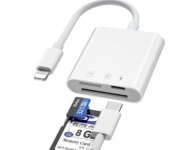
In today's digital world, our iPhones are often our primary cameras, but managing photos and videos, especially from dedicated cameras or other devices, can sometimes be a hurdle. If you've ever asked, "Can I read an SD card with my iPhone?" or wondered, "How do I transfer photos from SD card to iPhone?" then you're in the right place!
This comprehensive guide is dedicated to exploring everything about SD card readers for iPhone – from understanding compatibility across different iPhone models (like the iPhone 15 and future iPhone 16/17 Pro) and connector types (Lightning vs. USB-C), to selecting the best SD card reader for iPhone, troubleshooting common issues like "Why won't my iPhone read my SD card?", and getting your precious memories onto your device. We'll focus on options readily available for our USA audience.
Let's dive in and make file transfers seamless!
I. The Need: Why Would You Want an SD Card Reader for iPhone?
While iPhones boast incredible cameras and ample internal storage, there are compelling reasons why an SD card reader for iPhone becomes an indispensable accessory for many users:
II. Compatibility First: Connecting SD Cards to Your iPhone (Lightning vs. USB-C)
The most critical factor in choosing an SD card reader for iPhone is understanding the connection port on your specific iPhone model. Apple's ecosystem has seen a significant shift, and this directly impacts your choice of reader.
A. iPhones with Lightning Port (iPhone 14 and older, including iPhone 13, 12, SE, etc.)
Many cameras (especially drones, action cams like GoPro, and some older phones) use microSD cards.
III. How to Transfer Photos & Files from SD Card to iPhone
Once you have the right SD card reader for iPhone and your card, transferring files is surprisingly easy.
A. For Photos and Videos (using the Photos App)
This is the most common use case and is very intuitive.
For iPhone 13 and newer, especially iPhone 15 with USB-C, the Files app has become much more powerful.
IV. Troubleshooting: "Why Won't My iPhone Read My SD Card?"
It's frustrating when your SD card reader for iPhone isn't cooperating. Here are common reasons and solutions for when your iPhone won't read your SD card.
A. Common Issues with Lightning Readers:
V. Where to Find the Best SD Card Reader for iPhone (USA Specific)
When you're looking for an SD card reader for iPhone nearby or a specific model, here are your best bets in the USA:
VI. Looking Ahead: iPhone 16, 17 Pro, and Beyond
As Apple continues to innovate, especially with the shift to USB-C on the iPhone 15, we can expect future models like the SD Card Reader for iPhone 16 and SD Card Reader for iPhone 17 Pro to fully embrace the USB-C standard. This means faster data transfer, broader compatibility with existing USB-C accessories, and potentially more advanced external storage integration with iOS. The days of exclusive Lightning accessories are gradually fading, paving the way for a more universal and efficient mobile workflow.
VII. Join the Discussion: Your SD Card Reader Experiences!
This guide aimed to cover everything you need to know about using an SD card reader for iPhone in the USA, from checking compatibility with your iPhone 14, 15, or even future 16/17 Pro, to troubleshooting when things go wrong.
Have you found a particular SD card reader for iPhone that you swear by? Any unique tips for how do I transfer photos from SD card to iPhone or manage files? Or perhaps a troubleshooting trick when your sd card reader iphone not working? Share your insights, recommendations, and questions below! Let's help each other get the most out of our iPhones and camera gear.
In today's digital world, our iPhones are often our primary cameras, but managing photos and videos, especially from dedicated cameras or other devices, can sometimes be a hurdle. If you've ever asked, "Can I read an SD card with my iPhone?" or wondered, "How do I transfer photos from SD card to iPhone?" then you're in the right place!
This comprehensive guide is dedicated to exploring everything about SD card readers for iPhone – from understanding compatibility across different iPhone models (like the iPhone 15 and future iPhone 16/17 Pro) and connector types (Lightning vs. USB-C), to selecting the best SD card reader for iPhone, troubleshooting common issues like "Why won't my iPhone read my SD card?", and getting your precious memories onto your device. We'll focus on options readily available for our USA audience.
Let's dive in and make file transfers seamless!
I. The Need: Why Would You Want an SD Card Reader for iPhone?
While iPhones boast incredible cameras and ample internal storage, there are compelling reasons why an SD card reader for iPhone becomes an indispensable accessory for many users:
- Photographers & Videographers: Professional and amateur photographers often use DSLRs or mirrorless cameras that store high-resolution photos and 4K videos on SD or microSD cards. An SD card reader allows for quick previews, editing, and sharing directly from their iPhone while on location.
- Data Transfer & Backup: Beyond media, these readers facilitate transferring files from various devices (drones, action cameras, older phones) to your iPhone or iPad, acting as a crucial bridge for mobile data management.
- Expanding Storage (Temporarily): While not direct storage expansion for the iPhone itself, it allows you to access large media libraries stored externally without filling up your phone's internal memory.
- Sharing Content: Quickly share photos and videos from an SD card with friends or colleagues using their iPhone, without needing a computer.
II. Compatibility First: Connecting SD Cards to Your iPhone (Lightning vs. USB-C)
The most critical factor in choosing an SD card reader for iPhone is understanding the connection port on your specific iPhone model. Apple's ecosystem has seen a significant shift, and this directly impacts your choice of reader.
A. iPhones with Lightning Port (iPhone 14 and older, including iPhone 13, 12, SE, etc.)
- The Apple Lightning to SD Card Camera Reader: This is often considered the gold standard for Lightning-equipped iPhones. It's an official Apple accessory (apple lightning to sd card reader / apple lightning to sd card camera reader) designed for seamless integration. It works out of the box with the Photos app and ensures reliable performance.
- How it works: Plug the Lightning connector into your iPhone. Insert the SD card into the reader. Your iPhone's Photos app should automatically open and present the option to import photos and videos.
- Benefits: Guaranteed compatibility, direct integration with iOS, usually no extra apps needed.
- Limitations: Slower transfer speeds compared to USB 3.0 or USB-C, typically only supports standard SD cards (requires an adapter for microSD).
- Third-Party Lightning SD Card Readers: Many reputable brands like SanDisk, Anker, Lexar, UGREEN, and Kingston offer SD card reader for iPhone, Lightning options. These often come at a lower price point than Apple's official accessory.
- Considerations:
- MFi Certification: Look for "Made for iPhone" (MFi) certification. This guarantees that the accessory meets Apple's performance and safety standards, significantly reducing compatibility issues and the dreaded "sd card reader for iphone not working" error.
- Supported Card Types: Some third-party readers might support both SD and micro SD card reader for iPhone slots directly, offering more versatility.
- App Requirement: Some might require a dedicated third-party app to access non-photo files (like documents, PDFs, etc.), as the native Photos app only handles media.
- Considerations:
- The Future is USB-C: With the iPhone 15 series, Apple transitioned from Lightning to USB-C. This is a game-changer for connectivity and speed.
- USB-C SD Card Readers: For these newer iPhones, you'll need an SD Card Reader for iPhone USB-C. Many existing USB-C card readers designed for iPads, MacBooks, or Android devices will now be compatible.
- Benefits:
- Faster Transfer Speeds: USB-C often supports higher data transfer rates (USB 3.0, 3.1, or even 3.2), which is crucial for large video files or high-resolution photo bursts.
- Universal Compatibility: USB-C is a universal standard, meaning your reader can likely work with a wide range of devices beyond just your iPhone.
- Versatility: Many USB-C readers offer multiple card slots (SD, microSD, CF) and sometimes even extra USB ports.
- How it works: Similar to Lightning, plug the USB-C reader into your iPhone. For photos/videos, the Photos app should prompt you to import. For other file types, you'll typically use the built-in "Files" app in iOS, which now fully supports external storage.
Many cameras (especially drones, action cams like GoPro, and some older phones) use microSD cards.
- Direct MicroSD Slots: Some micro sd card reader for iphone accessories will have a dedicated slot for microSD cards. This is the most convenient option.
- SD Card Adapter: If your reader only has a standard SD card slot, you'll need a microSD to SD card adapter (which usually comes with the microSD card) to use it.
III. How to Transfer Photos & Files from SD Card to iPhone
Once you have the right SD card reader for iPhone and your card, transferring files is surprisingly easy.
A. For Photos and Videos (using the Photos App)
This is the most common use case and is very intuitive.
- Connect the Reader: Plug your SD card reader into your iPhone's Lightning or USB-C port.
- Insert SD Card: Insert your SD or microSD card into the reader.
- Photos App Auto-Launch: Your iPhone's Photos app should automatically open and display an "Import" tab at the bottom. If it doesn't, open the Photos app manually and look for the "Import" tab.
- Select & Import:
- You'll see thumbnails of all the photos and videos on your SD card.
- Tap "Import All" to transfer everything.
- Or, tap on individual items you want to import and then tap "Import Selected."
- Keep or Delete: After importing, the Photos app will ask if you want to "Keep" or "Delete" the imported items from the SD card.
- "Keep" means the files remain on the SD card (good for backup).
- "Delete" means the files are removed from the SD card (frees up space on the card).
- Find Your Files: The imported photos and videos will appear in your "Recents" album (and other relevant albums) within the Photos app.
For iPhone 13 and newer, especially iPhone 15 with USB-C, the Files app has become much more powerful.
- Connect & Insert: Connect your SD card reader for iPhone and insert the SD card.
- Open the Files App: Locate and open the blue "Files" app icon on your iPhone.
- Browse External Location: Under "Browse," you should see a new location appear (e.g., "NO NAME," "Untitled," or the specific name of your SD card). Tap on it.
- Access & Manage: You can now browse all the folders and files on your SD card.
- Copy to iPhone: To transfer files to your iPhone, tap and hold on a file or folder, then select "Copy." Navigate to a location on your iPhone (e.g., "On My iPhone" or iCloud Drive), tap and hold, and select "Paste."
- Open Directly: You can tap on many file types (PDFs, Word documents, text files) to open and view them directly from the SD card.
- Move/Rename/Delete: The Files app provides full management capabilities for the content on your SD card.
IV. Troubleshooting: "Why Won't My iPhone Read My SD Card?"
It's frustrating when your SD card reader for iPhone isn't cooperating. Here are common reasons and solutions for when your iPhone won't read your SD card.
A. Common Issues with Lightning Readers:
- Dirty Ports: Check your iPhone's Lightning port and the reader's connector for lint, dust, or debris. Use a small, non-metallic tool (like a toothpick) or compressed air to gently clean them.
- Card Format: iPhones primarily read SD cards formatted with FAT32 or exFAT. If your card is formatted with NTFS (common on Windows PCs), the iPhone might not recognize it.
- Solution: Back up your data on a computer, then reformat the SD card to exFAT.
- Unsupported File Types: While the Photos app handles JPEGs, HEICs, and standard video formats, it might not automatically import RAW files from specific cameras or unusual video codecs. The Files app offers more flexibility.
- Power Draw: Some older or non-MFi certified readers might draw too much power, especially with high-capacity cards, causing an error.
- Solution: Try connecting the reader (if it supports it) to a powered USB hub, or try another MFi-certified reader.
- Faulty Reader: The reader itself might be defective. Try it with another iPhone or iPad if possible.
- iOS Version: Ensure your iPhone is running a reasonably up-to-date version of iOS. Older versions might lack full support for external storage features.
- Card Format: Same as Lightning, ensure the card is FAT32 or exFAT. NTFS is often read-only or not recognized.
- USB-C Standard: While most USB-C readers should work, ensure it's a quality reader. Some very cheap readers might have compatibility quirks.
- Power Delivery: If your USB-C reader is a complex hub with many ports, it might require external power for certain functions. However, a simple card reader should draw enough power directly from the iPhone 15.
- Files App Usage: For non-photo files, remember to explicitly navigate to the external drive section in the Files app. It won't pop up like the Photos app.
- Corrupt SD Card: The SD card itself might be damaged or corrupted. Try inserting it into a computer to see if it's readable there.
- Solution: If corrupt, you might need data recovery software or need to reformat the card (losing all data).
- Locked SD Card: Most SD cards have a small physical write-protection switch on the side. Ensure this switch is in the "unlocked" position. If it's locked, your iPhone can read but not write, and sometimes can even prevent it from being recognized correctly.
- Unsupported Capacity: Very old readers might not support extremely high-capacity SD cards (e.g., 512GB, 1TB). Check the reader's specifications.
- Restart iPhone: A classic IT solution, but effective! Sometimes a quick restart of your iPhone can resolve minor software glitches preventing the reader from being recognized.
- Try Another Card/Reader: If possible, test your iPhone with a different SD card and/or a different SD card reader for iPhone to isolate whether the issue is with the card, the reader, or your iPhone.
V. Where to Find the Best SD Card Reader for iPhone (USA Specific)
When you're looking for an SD card reader for iPhone nearby or a specific model, here are your best bets in the USA:
- Apple Stores & Apple.com: For guaranteed compatibility, especially if you have a Lightning iPhone, the official apple lightning to sd card reader is your safest bet.
- Big Box Retailers (In-Store & Online):
- SD Card Reader for iPhone Walmart: Walmart, Best Buy, and Target often stock a good selection of both official Apple readers and reputable third-party brands (SanDisk, Anker, Lexar, UGREEN, Kingston). Check their electronics sections for "Memory Card Readers."
- SD Card Reader for iPhone in store: These are great options if you need something immediately.
- Online Retailers (Amazon, B&H Photo, Adorama):
- Amazon will have the widest selection, including niche brands and budget-friendly options. Read reviews carefully!
- Specialty camera stores like B&H Photo and Adorama are excellent sources for high-quality, professional-grade readers, including SD Card Reader for iPhone USB-C options for newer models.
- Key Considerations:
- "Best SD Card Reader for iPhone": This often comes down to a balance of speed, durability, and compatibility with your iPhone model (Lightning vs. USB-C) and the types of cards you use (SD, microSD). SanDisk and Anker are consistently well-reviewed.
- Price: Prices vary widely, from under $10 for basic readers to over $50 for high-speed, multi-format professional hubs.
VI. Looking Ahead: iPhone 16, 17 Pro, and Beyond
As Apple continues to innovate, especially with the shift to USB-C on the iPhone 15, we can expect future models like the SD Card Reader for iPhone 16 and SD Card Reader for iPhone 17 Pro to fully embrace the USB-C standard. This means faster data transfer, broader compatibility with existing USB-C accessories, and potentially more advanced external storage integration with iOS. The days of exclusive Lightning accessories are gradually fading, paving the way for a more universal and efficient mobile workflow.
VII. Join the Discussion: Your SD Card Reader Experiences!
This guide aimed to cover everything you need to know about using an SD card reader for iPhone in the USA, from checking compatibility with your iPhone 14, 15, or even future 16/17 Pro, to troubleshooting when things go wrong.
Have you found a particular SD card reader for iPhone that you swear by? Any unique tips for how do I transfer photos from SD card to iPhone or manage files? Or perhaps a troubleshooting trick when your sd card reader iphone not working? Share your insights, recommendations, and questions below! Let's help each other get the most out of our iPhones and camera gear.